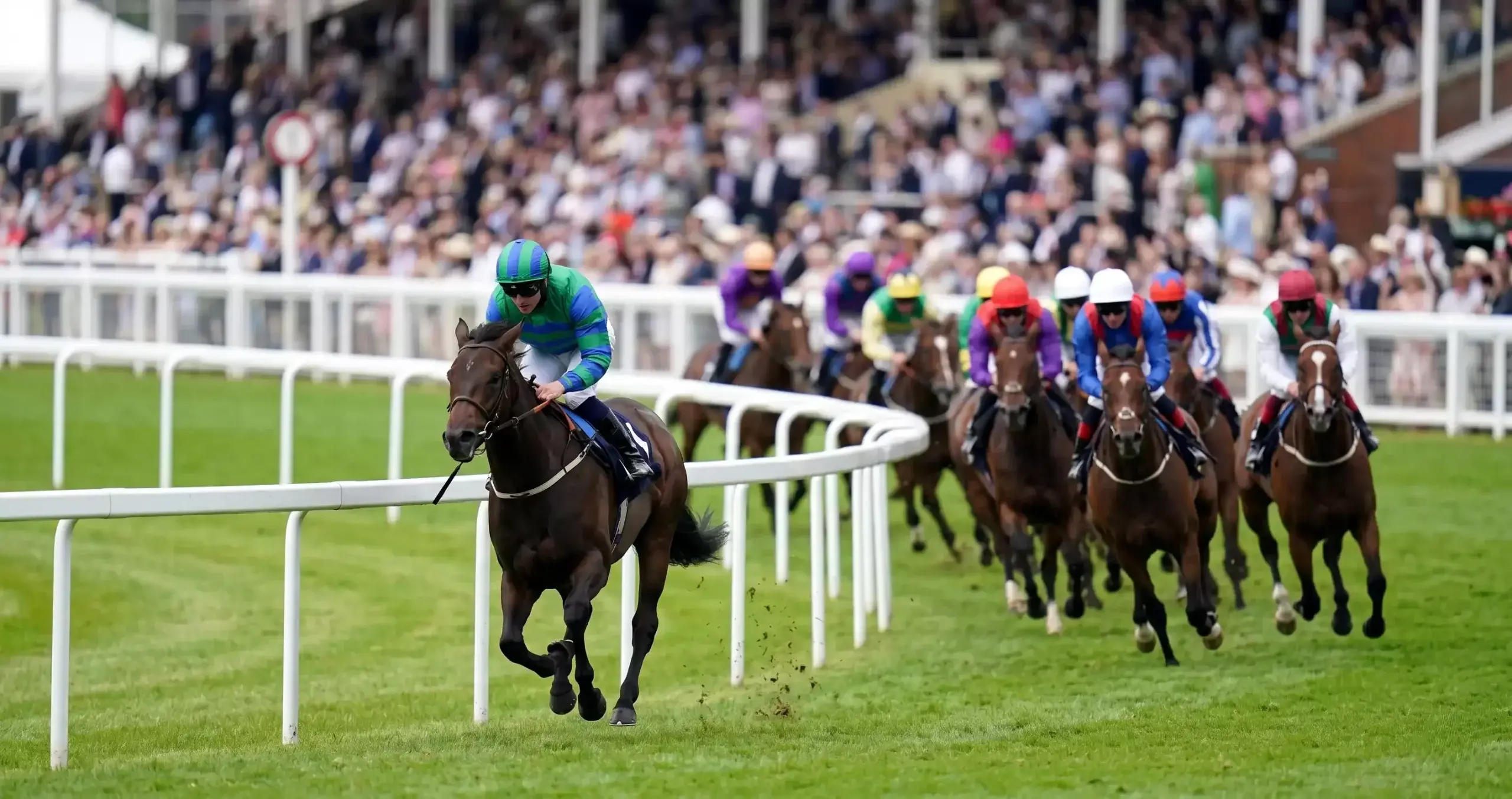


Finding Value Models Within BHA Handicap Weight Distribution
Every Saturday afternoon on Channel 4 (now ITV Racing), the feature race is almost always a handicap. There’s a reason for that. Handicaps produce the tightest, most unpredictable finishes in horse racing — and they’re the race type where informed bettors have the greatest opportunity to find value, precisely because the market struggles to separate the runners.
A handicap is a race where each horse carries a different weight, determined by the BHA handicapper, to theoretically equalise the field. The best horse carries the most weight; the weakest carries the least. In a perfectly handicapped race, every horse would cross the line at exactly the same moment. In reality, the handicapper works with imperfect information — and that imperfection is where the edge lives.
Favourites win only 25.7% of handicap races. Compare that to 39% in non-handicaps and you see why handicaps attract a different kind of bettor. The market leader is beaten three times out of four. If you can develop a method for identifying the horses the handicapper has underestimated — the ones carrying less weight than their ability deserves — you’re operating in the most profitable segment of UK racing.
BHA Ratings and Weight Allocation: The Handicapper’s Logic
Understanding how the handicapper thinks is the first step to beating them. The BHA employs a team of official handicappers who assign every horse a numerical rating based on their race performances. On the flat, ratings range from the low 40s for the weakest horses up to 130 or beyond for Group 1 champions. Over jumps, the scale is similar.
In a handicap race, the horse with the highest rating carries top weight. For every pound of weight below top weight, the horse’s rating is one pound lower. A race with a weight range of 10 stone to 9 stone means a 14-pound spread of ratings across the field. The conversion is direct: 1 pound of weight is supposed to equal 1 pound of ability on the BHA scale.
The critical window for bettors is the gap between a horse’s current rating and its actual ability. Ratings are reactive, not predictive — they reflect what a horse has done, not what it’s about to do. A young horse improving with every run might have a rating of 78 based on its last three performances, but its true ability might be closer to 85. That horse is “well handicapped” by 7 pounds. In a handicap race, those 7 pounds translate into a meaningful advantage that the market sometimes prices correctly and sometimes doesn’t.
The handicapper reassesses ratings after every race. A horse that wins a handicap by three lengths will typically see its rating rise by 5-8 pounds for the next entry. This means handicap winners face a higher burden next time — which is why backing the “last time out winner” in handicaps is often a losing strategy. The market overvalues recent winners because the price doesn’t fully reflect the rating rise that makes the horse’s task harder.
Why Favourites Win Only 25.7% of Handicap Races
I used to find the 25.7% figure surprising. The market analyses form, assesses conditions, factors in trainer and jockey data, and still gets it wrong three-quarters of the time in handicaps? Now I understand why. The handicapping system is specifically designed to neutralise the form advantages that make a horse favourite.
In a non-handicap race, the best horse simply has to be the best horse. Superior class, better form, a proven course record — all these advantages translate directly into performance because every horse carries similar weight. In a handicap, those same advantages are offset by extra weight. The horse with the best form carries the most weight; the horse with the worst form carries the least. The playing field isn’t just levelled — it’s engineered to be level.
The remaining variation — the 25.7% favourite win rate rather than pure randomness — comes from factors the handicapper can’t fully account for. Improvement curves in younger horses. Fitness advantages from recent racing. Going preferences that don’t show in the rating. Tactical advantages from draw positions. The better you understand these residual factors, the better you can identify which handicap favourites are genuine and which are vulnerable.
The overall win rate also masks a field-size effect. In small-field handicaps (6-8 runners), favourites win more often because there are simply fewer horses to beat. In large-field handicaps (16+ runners), the favourite win rate drops below 20%. This is the territory where each-way betting strategies become most effective — the favourite is unreliable, but the place part of an each-way bet captures the wider spread of likely place finishers.
Finding Value in Handicap Markets: Well-Handicapped Horses
The phrase “well-handicapped” gets thrown around loosely, but it has a specific meaning. A well-handicapped horse is one whose current BHA rating underestimates its true ability. Identifying these horses before the market does is the core skill of handicap betting.
Several situations produce well-handicapped runners. A horse returning from a break might have improved physically during its time off — muscle maturity, recovery from a minor issue, or simply the natural development arc of a young horse. Its rating reflects pre-break form; its ability reflects post-break improvement. The market tends to price returning horses cautiously, creating an opportunity if you’ve done the background work on the stable’s intentions.
Horses dropping in trip or switching surface can also be well-handicapped. A horse rated 82 based on performances over a mile and a half might have a true ability of 88 over a mile if speed is its natural weapon and it’s been running over an unsuitable distance. The rating doesn’t adjust for theoretical performance over different trips — it reflects actual performances over the trips it’s been racing at.
Headgear changes — the application of blinkers, cheekpieces, or a visor for the first time — are another well-handicapped trigger. The rating reflects runs without headgear; the addition of equipment designed to sharpen concentration can unlock several pounds of improvement. First-time headgear is a well-documented angle in UK handicap racing, and while the market has become more efficient at pricing it in, it still undervalues the effect in certain race types.
As Skrill’s analysis of value betting explains, the opportunity arises when the odds of an event occurring are greater than the odds assigned by the bookmaker. In handicap racing, this opportunity surfaces most often on horses whose ability-to-rating gap is widest — and that gap is widest on improvers, returners, and horses whose conditions have changed in their favour since their last run. The number of horses in training in the UK has fallen to 21,728 — down 2.3% on the previous year — which means fewer runners per meeting and, paradoxically, more concentrated pools of talent in feature handicaps where the well-handicapped horses tend to cluster.