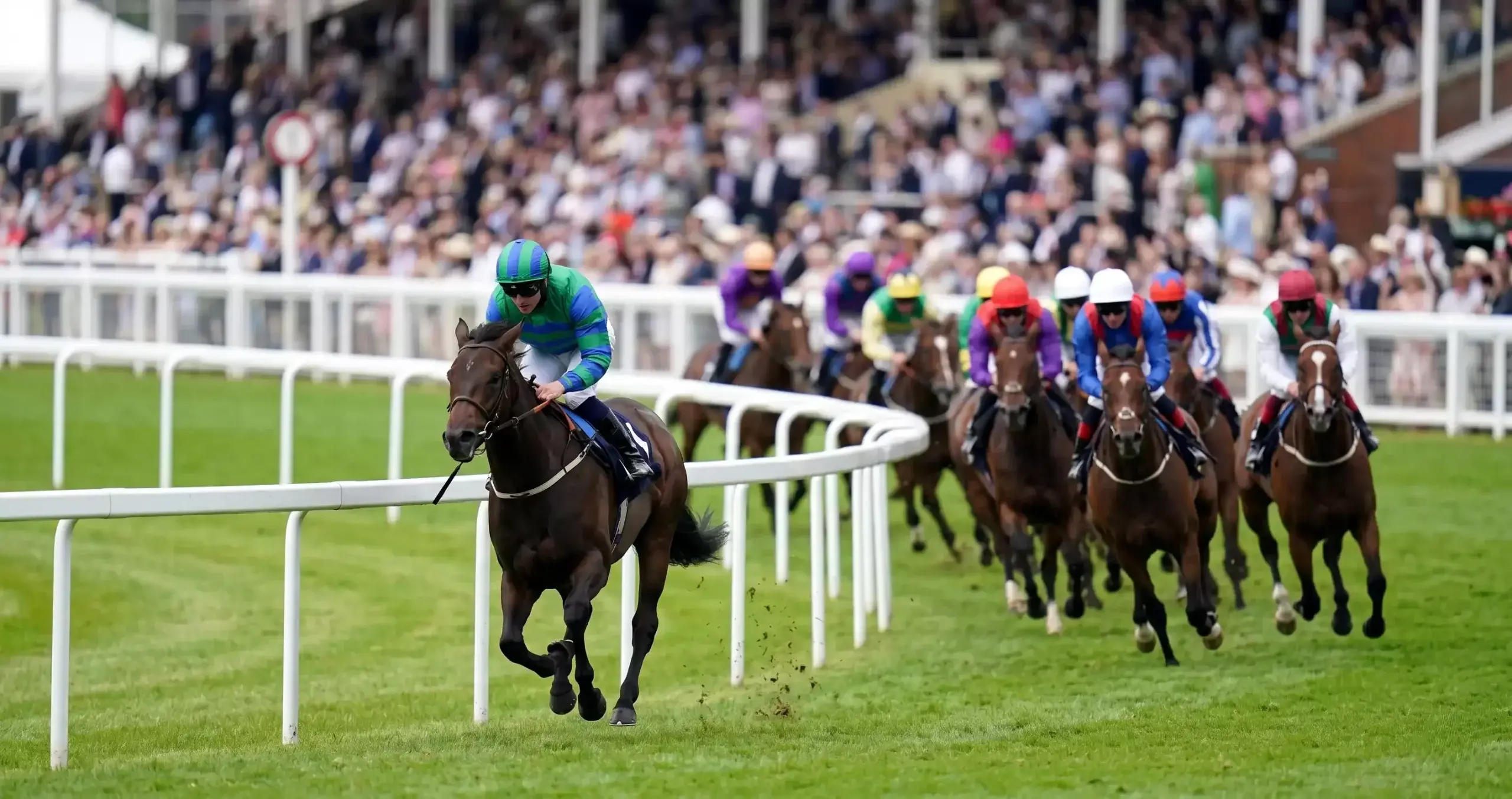


Academic Evidence: The 16% Advantage of Unraced 2-Year-Olds
The most cited academic study on this topic, conducted by Paton, Vaughan Williams, and colleagues and published on ResearchGate, examined the performance of debutant horses against similarly priced runners that had prior racing experience. The finding was striking: previously unraced two-year-olds won at a rate approximately 16% higher than horses with established form that were offered at the same odds.
That 16% figure has significant implications. It means the market is systematically mispricing debutants — not because bookmakers don’t know about insider information, but because the information is inherently private and the public market cannot fully process what it cannot see. A debutant priced at 8/1 based on pedigree, stable reputation, and general assessment has, according to the data, a better chance than an 8/1 shot with three runs of mediocre form. The market treats them as equivalent; the evidence says they’re not.
Brant Dunshea, then Acting Chief Executive of the British Horseracing Authority, acknowledged the broader challenges facing the sport, noting from the outset of the Gambling Act Review that British racing has repeatedly warned of the unintended consequences of well-meaning policy decisions. Part of that warning relates to market integrity — and the debutant effect is a reminder that horse racing markets process private information differently from public information, which is one of the features that makes racing markets both fascinating and exploitable.
The effect is strongest in two-year-old flat racing because that’s where the information gap is widest. A two-year-old making its debut has never raced publicly. Everything the connections know comes from private morning gallops and observation at home. As the horse accumulates public form — one run, two runs, three runs — the information gap narrows and the debutant advantage disappears. By the time a horse has four or five career starts, the public form is comprehensive enough that the market can price it accurately without relying on insider assessment.
Reading Market Signals for Debutants: Price, Stable, and Connections
If the insider advantage is real, the question becomes: how do you identify which debutants the connections fancy? You can’t call the trainer and ask. But you can read the market — because when connections are confident, they bet, and when they bet, the price moves.
The first signal is the morning price. A debutant that opens at 16/1 in the early shows and shortens to 8/1 by mid-morning has attracted money from informed sources. The magnitude of the contraction matters: a move from 16/1 to 14/1 is marginal and might reflect general market correction. A move from 16/1 to 8/1 is aggressive and almost certainly reflects informed backing. I track morning prices on debutants specifically and flag any runner whose price halves or more between the early show and the 11:00 market.
The second signal is stable reputation. Certain trainers have a well-documented pattern of producing ready-to-win debutants — horses that arrive at the racecourse fully prepared rather than needing a run to learn the ropes. Approximately 15% of UK adults bet on horse racing at least once a month, with the 25-34 age group leading at 32% — and most of those bettors know the big trainer names. But the market doesn’t always fully price the significance of a debutant from a yard with a 30% first-time-out strike rate versus one with a 5% record. That gap between stable reputation and market pricing is where consistent value lives.
The third signal is the jockey booking. When a top jockey takes a ride on a debutant in a minor maiden race at a Monday meeting, that booking carries information. Elite jockeys pick their rides carefully, and choosing to ride an unraced horse for a specific trainer in a specific race usually means they’ve been told the horse has ability. Conversely, a debutant running with a claiming jockey or an unknown apprentice — while not a guaranteed negative — suggests the connections are treating the race as an educational run rather than a winning opportunity.
A Practical Framework for Betting on First-Time Starters
My debutant betting framework combines three elements: market movement, stable profile, and race context.
I start by filtering the day’s race cards for maiden races and novice events with significant debutant entries. Handicaps are excluded because debutants don’t run in handicaps — they need three qualifying runs before receiving an official rating. The target races are maidens, novices, and conditions stakes where unraced horses can appear.
Next, I check morning market movements on every debutant in those races. Any debutant that has shortened significantly — by more than 30% from its opening price — goes onto a shortlist. Debutants that open at a big price and stay there, or drift further, are almost certainly not fancied by their connections and are eliminated.
For the shortlisted runners, I check the trainer’s first-time-out record — specifically their strike rate with debutants over the past two to three seasons. A trainer with a 25% debutant strike rate sending out a horse that’s being backed in the market is a much stronger signal than the same market movement for a trainer whose debutants routinely need a run before they’re competitive. I also check the jockey booking: a stable’s first-choice jockey riding the debutant adds confidence; an unfamiliar jockey weakens the signal.
Finally, I assess the race context. A debutant in a five-runner conditions stakes at Newmarket against three experienced horses with strong form faces a stiff task regardless of connections’ confidence. A debutant in a 12-runner maiden at Nottingham where half the field is also debuting and the other half has moderate form is running in a race where the form puzzle is wide open — and that’s where the insider advantage translates most readily into a winning chance.
The staking is conservative. I never stake more than one unit on a debutant, regardless of how strong the signals are, because the inherent uncertainty of an unraced horse means that even a well-fancied debutant can disappoint on its first encounter with the noise, the crowd, and the competitive intensity of a racecourse. Over a season of 80 to 100 qualifying debutant bets, the aggregate return is where the edge materialises — not on any individual selection.