
Applying Form Filters to 40-Runner Marathon Handicaps
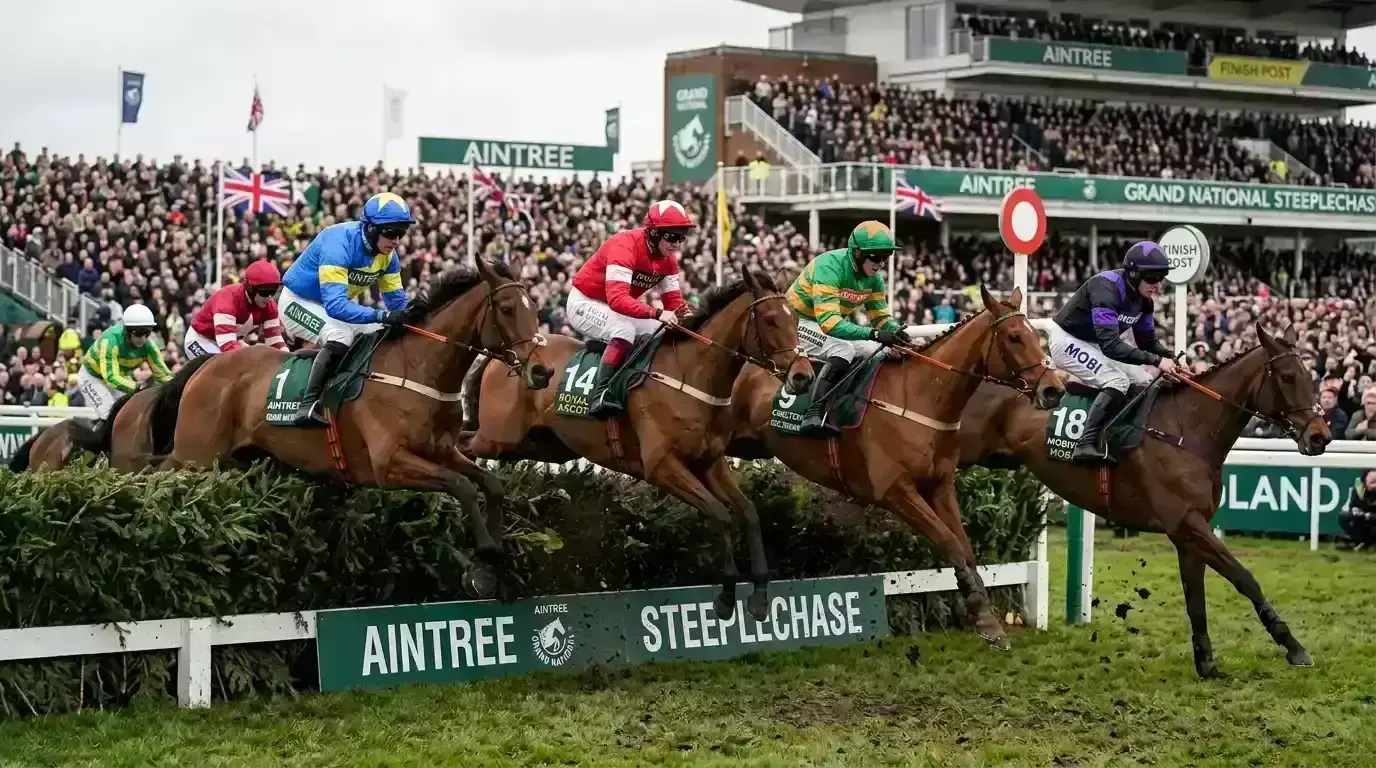
The Grand National is the one race where everyone has an opinion and almost nobody has a method. Office sweepstakes, name-picking, lucky numbers — the public treats the race as a lottery, and the betting market reflects that chaos. Over four miles and two furlongs, across 30 of the most demanding fences in racing, a maximum field of 40 runners produces a puzzle so complex that even professional bettors approach it with more humility than usual.
But a puzzle isn’t a lottery. The Grand National rewards preparation, and the data tells us what kind of horse tends to win it. British racecourse attendance reached 5.031 million in 2025 — the highest figure since 2019 — and Aintree’s Grand National meeting contributes a substantial share of that total. The public fascination with this race creates exactly the kind of overbet market where disciplined punters can find value, provided they know what to filter for.
I’ve bet the Grand National seriously for seven years, and the approach I’ve settled on combines weight analysis, stamina profiling, and each-way tactics tailored to the unique characteristics of a 40-runner handicap chase.
Weight Trends: What the Handicap Tells You About Grand National Winners
The Grand National is a handicap, and the handicap structure is the first thing I look at. The weights range from the top weight of 11 stone 10 pounds down to the minimum of 10 stone, with a maximum field of 40. The spread of weight is large enough that the handicap genuinely affects the result — carrying an extra stone over four and a quarter miles on soft ground is a significant physical burden, and the data confirms it.
Winners from the top of the handicap — horses carrying 11 stone 4 pounds or more — are rare. The demands of the distance and the fences penalise class horses carrying big weights in a way that shorter handicap chases don’t. Most Grand National winners in recent decades have carried between 10 stone 4 pounds and 11 stone 2 pounds. That middle band is the sweet spot where a horse has enough ability to compete but isn’t crushed by the weight over the extreme distance.
Handicap favourites across UK racing win only about 25.7% of the time, and in a 40-runner race that figure drops further. The favourite in the Grand National has a poor record relative to its price. The public overloads money onto the horse they’ve heard of — the one their colleague tipped, the one the Racing Post profile featured — and the resulting price rarely offers value. I’m not saying never back the favourite, but the data strongly suggests that the place to find value is in the 10/1 to 33/1 range, where solid profiles meet prices inflated by the sheer number of runners.
The Winning Profile: Age, Stamina, Fencing Record
Three profile characteristics filter out the majority of the 40-runner field before you even look at form.
Age matters. The ideal Grand National horse is between 8 and 11 years old. Younger horses lack the experience to handle the unique Aintree fences and the sustained pace over four miles. Older horses — 12 and above — face a declining ability to recover from the physical toll of the race. The 9-year-old and 10-year-old age group has produced the highest concentration of winners in the modern era, and I weight this group heavily in my shortlist.
Stamina is non-negotiable. The Grand National is the longest race most horses will ever run, and it demands a level of endurance that many stay-three-mile chasers simply don’t possess. Proven stamina over three miles and beyond is essential — not just finishing, but finishing strongly. A horse that has won over three miles and two furlongs or further and showed no signs of stopping is a far better Grand National prospect than a brilliant two-and-a-half-mile chaser stretching to an unfamiliar trip.
Fencing record is the third filter. The Grand National fences — although modified and made safer in recent years — are still unique in British racing. Horses with a history of jumping errors, unseating riders, or falling at regulation fences face amplified risk over 30 Grand National obstacles. I look for horses with clean jumping records over their last five chase starts and, ideally, experience over the Aintree fences from the Topham Chase or the Becher Chase earlier in the season. Course experience is enormously valuable in this race.
Each-Way Tactics in a 40-Runner Field: Place Terms and Value
The Grand National is the best each-way race in the UK calendar, and it’s not close. With 40 runners, the standard each-way terms are one quarter of the win odds for the first four places. Some bookmakers extend this to five or even six places as a promotion, which tilts the mathematics significantly in the bettor’s favour.
In a race with this many runners, the place part of an each-way bet becomes the primary value driver rather than the win part. At 20/1, the place return at quarter odds is 5/1 for the first four — a reasonable return on a horse that only needs to finish in the top 10% of the field. At 33/1, the place return is 33/4 — over 8/1 — for a horse that has multiple realistic scenarios where it finishes in the first four without winning.
My Grand National each-way approach is to select two or three horses in the 14/1 to 33/1 range that fit the weight, age, stamina, and fencing profile. I don’t back the favourite each-way — the place return at a short price rarely justifies the outlay. And I don’t back 50/1 or 66/1 outsiders each-way — at those prices, the place return is generous but the probability of even placing is too low to represent consistent value.
The sweet spot is a horse at 16/1 to 25/1 with a genuine place chance. A 20/1 each-way bet costs two units (one for the win, one for the place). If the horse finishes in the first four but doesn’t win, you collect 5/1 on the place part — a three-unit profit after subtracting the one-unit loss on the win part. If it wins, you collect both parts for a combined return of 25 units on a two-unit stake. That risk-reward profile, applied to horses that genuinely fit the Grand National mould, is where the race delivers long-term value.
Extra-place promotions — where a bookmaker pays out on five or six places instead of four — are worth seeking out. Every additional place position in a 40-runner field meaningfully increases the probability of collecting on the place part without reducing the payout. When a bookmaker offers six places on the Grand National, the effective each-way bet becomes considerably more favourable than the standard four-place terms.