
Calculating the Mathematical Margin in Fixed-Odds Markets
A few years into my betting career, I ran the numbers on six months of what I thought were solid, well-researched wagers. My strike rate was reasonable — around 30% on selections averaging 7/2. I should have been turning a profit. I wasn’t. The culprit was something I’d never bothered to calculate: the bookmaker’s overround.
The overround is the hidden mechanism by which every traditional bookmaker guarantees themselves a profit before a single horse leaves the stalls. It works like this: if you add up the implied probabilities of every runner in a race based on the bookmaker’s odds, the total won’t be 100%. It’ll be 115%, 120%, sometimes 130% or more. That excess above 100% is the overround — the bookmaker’s built-in margin on the market.
Think of it as a tax on every bet you place. A typical UK horse racing market carries an overround of 15-20% for standard fixtures. At smaller meetings with thin fields, that margin can balloon past 25%. You’re not betting into a fair market — you’re betting into one that’s structurally tilted against you before you’ve even assessed a single horse’s form.
Understanding this mechanism is the first step toward actually finding profitable bets. You can’t identify value if you don’t know how much value the bookmaker has already extracted from the odds.
How to Calculate the Overround on Any Race
The calculation takes thirty seconds and a phone calculator. I do it before looking at a single race in detail — it tells me whether the market is even worth engaging with.
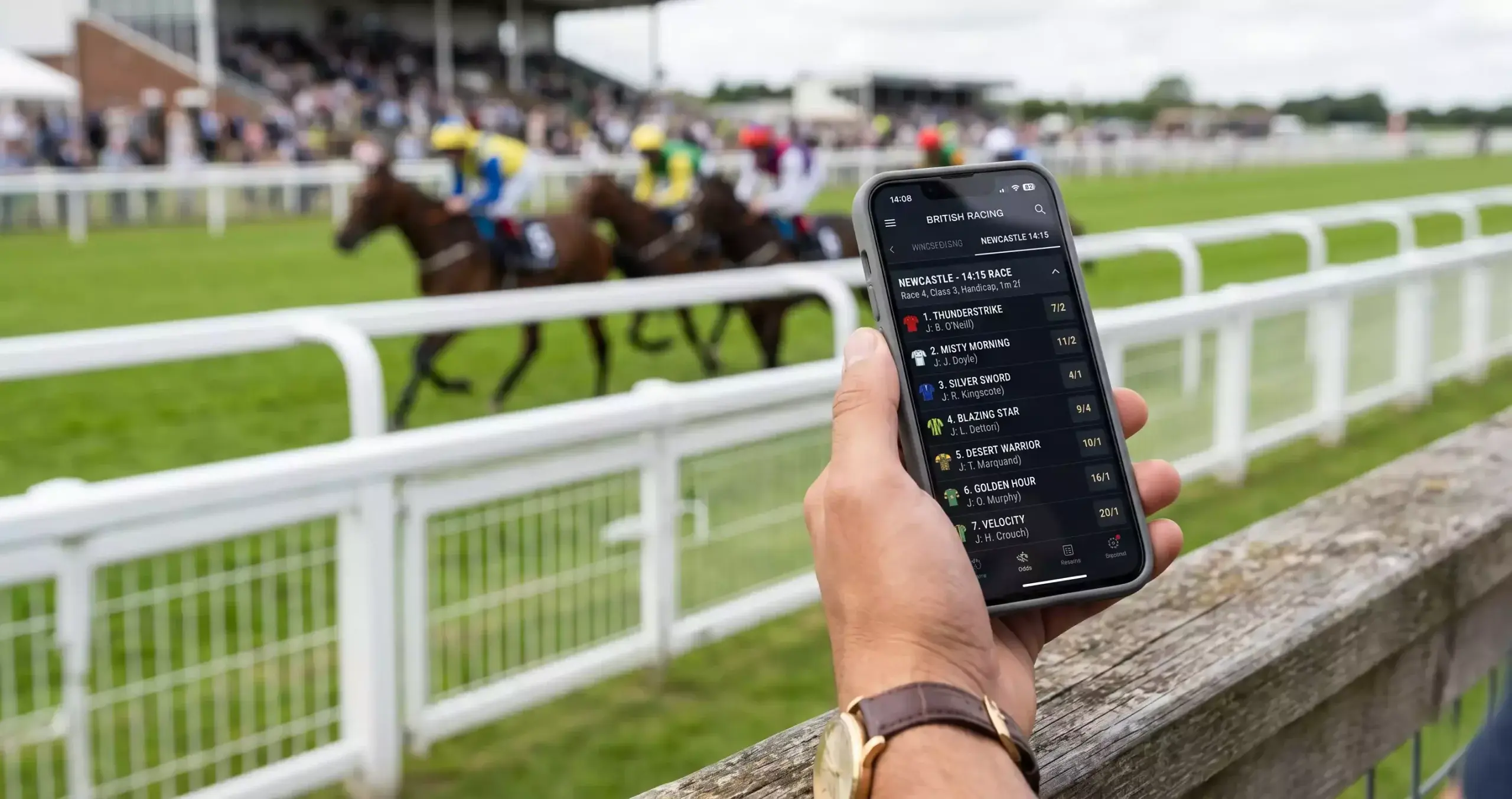
Take each runner’s fractional odds and convert them to implied probability. The formula: implied probability = stake / (stake + winnings) x 100. At 3/1, that’s 1/(1+3) x 100 = 25%. At 5/2, it’s 2/(2+5) x 100 = 28.6%. At evens, it’s 1/(1+1) x 100 = 50%.
If you prefer decimal odds, it’s even simpler: 1 divided by the decimal odds, multiplied by 100. Decimal 4.00 gives you 25%. Decimal 3.50 gives you 28.6%.
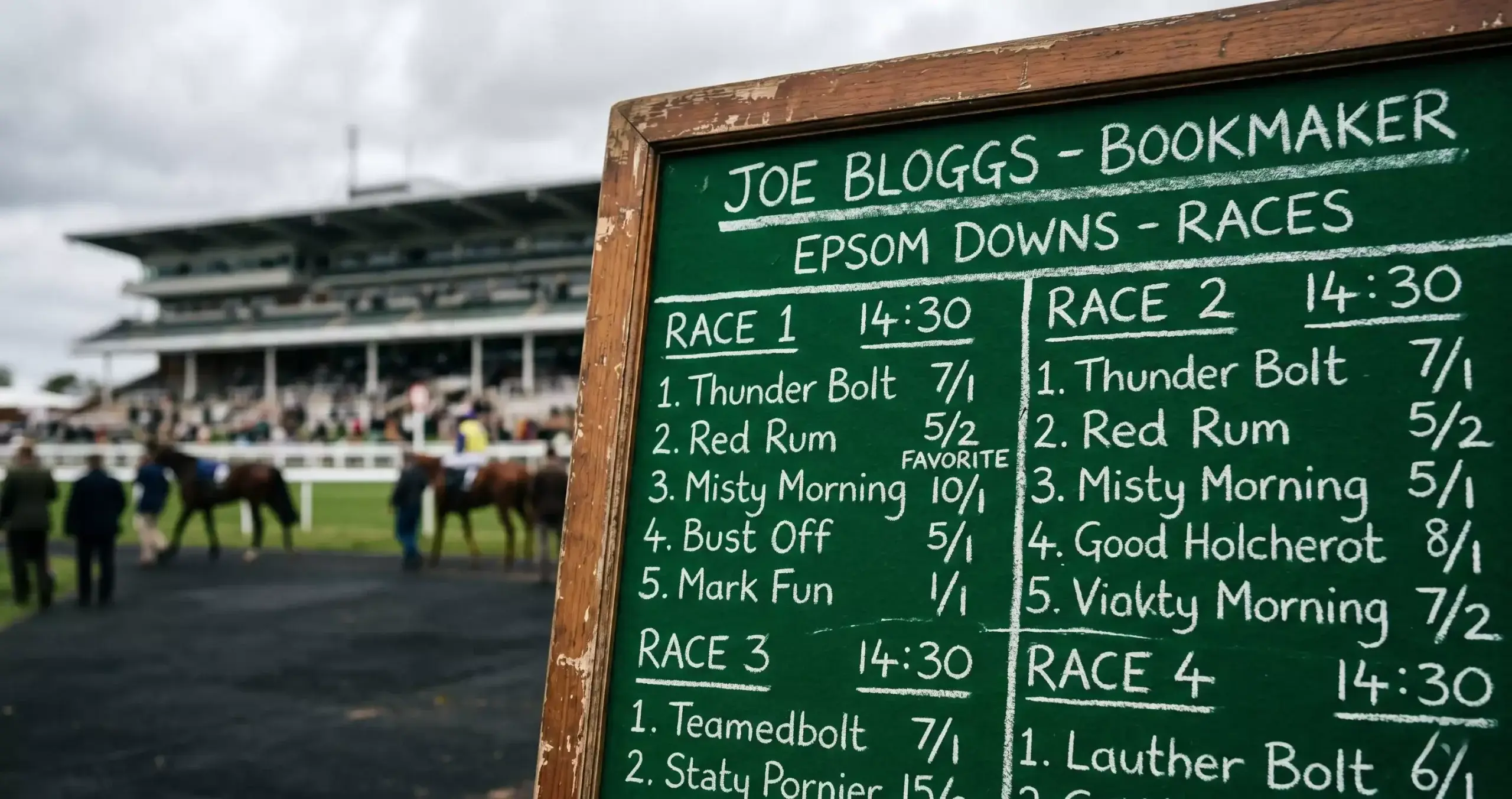
Now add up the implied probabilities for every runner in the race. A perfectly fair market totals exactly 100%. In practice, here’s what a seven-runner race might look like: favourite at 2/1 (33.3%), second favourite at 3/1 (25%), third choice at 9/2 (18.2%), then 8/1 (11.1%), 10/1 (9.1%), 16/1 (5.9%), and 25/1 (3.8%). The total: 106.4%. The overround on this market is 6.4% — unusually tight.
A more typical twelve-runner handicap might total 118-122%. That means for every pound in the market, the bookmaker is offering prices as though there’s only 82-85 pence worth of value to distribute. The remaining 15-18 pence is their margin.
What matters for your betting is the relative overround on specific horses. Bookmakers don’t spread the margin evenly — they tend to load more overround onto longer-priced runners, where punters are less price-sensitive. This is one reason the favourite-longshot bias exists: longshots are systematically overpriced relative to their true winning chances.
UK Overround Trends: From 28% in 2001 to 20% Today
The UK betting landscape has shifted dramatically over the past two decades, and overround data tells the story. In 2001, the average bookmaker overround on horse racing sat around 28%. By 2022, it had dropped to a historic low of roughly 20%. That’s a meaningful improvement for bettors — but don’t confuse a shrinking margin with a fair one.
The primary driver of this compression was competition from betting exchanges, particularly Betfair, which launched in 2000 and fundamentally disrupted the market. When punters could suddenly see exchange odds with a combined overround of just 101-105%, the inflated margins of traditional bookmakers became obvious. High-street and online bookmakers were forced to sharpen their prices or lose market share.
The trend has levelled off in recent years. With betting turnover on UK racing falling 10.3% cumulatively since 2023, bookmakers are under pressure to maintain revenue per race. Some have quietly widened their margins on lower-profile meetings while keeping flagship race prices competitive. This creates a two-tier market: Premier fixtures like Cheltenham, Ascot and the Guineas card at Newmarket carry tighter overrounds because they attract scrutiny, while a Wednesday afternoon at Sedgefield or Plumpton can see margins creep back toward 25%.
The practical takeaway is straightforward. If you’re serious about finding value, check the overround before you bet. Markets above 125% are rarely worth engaging with unless you’ve identified a significant edge on a specific runner. Markets below 110% — common on exchanges and occasionally on competitive bookmaker markets for feature races — give you the best mathematical starting point.
Comparing Overrounds: Traditional Bookmakers vs Betfair
I maintain a spreadsheet where I log the overround on every race I consider betting on. After three years of data, the pattern is unmistakable. Traditional bookmaker markets on standard UK racing fixtures average around 118% overround. The same races on Betfair Exchange average 102-103% on the back side.
That difference — roughly 15 percentage points — represents the single biggest structural advantage available to UK racing bettors. On the exchange, you’re betting into a market where 97-98 pence of every pound is distributed as potential winnings. At a bookmaker, you’re getting 82-85 pence.
The catch is commission. Betfair charges a base commission of 5% on net profits, which effectively adds a small layer back onto your costs. Even accounting for commission, though, the effective margin on exchange bets remains dramatically lower than at traditional bookmakers. A 5% commission on a winning bet at true odds is materially different from a 15-20% overround embedded in the odds themselves.
There are situations where bookmakers offer better value despite their higher overround. Best Odds Guaranteed promotions, for instance, can flip the equation on early-morning prices when a horse drifts to a higher starting price. Price boosts on selected races occasionally push individual odds above exchange equivalents. But these are exceptions — promotions designed to create the perception of value rather than structurally fairer markets.
The overround isn’t just a number. It’s the foundation on which every betting decision should rest. Once you start calculating it habitually, you’ll find yourself naturally gravitating toward markets where the maths gives you a fighting chance — and walking away from the ones where the bookmaker has already won before the race begins.