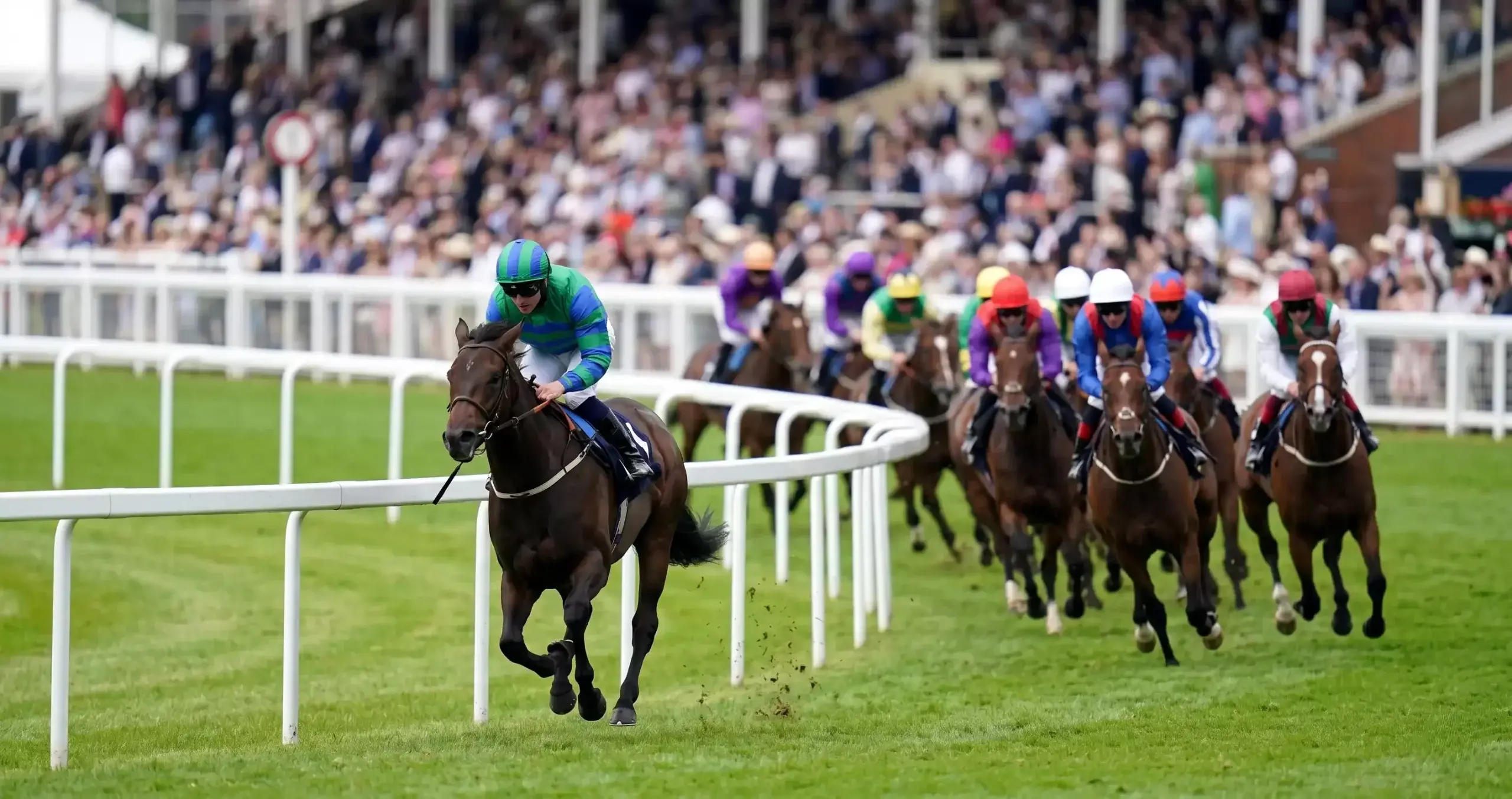


Applying Mathematical Staking to Multi-Selection Wagers
I remember standing at Newmarket years ago, utterly convinced the race would be won by one of three horses but unable to decide which. I backed one, watched another win, and spent the drive home doing mental arithmetic on what would have happened if I’d split my stake. That evening I discovered dutching — and it changed how I approach competitive races entirely.
Dutching is the method of splitting a single stake across multiple selections so that you make the same profit regardless of which one wins. It’s named after the legendary Dutch Schultz, a 1920s New York racketeer who reportedly used the technique to guarantee returns from rigged races. You don’t need rigged races to benefit — you need competitive fields where more than one horse fits your analysis.
The core idea is simple. Instead of picking one horse and hoping, you identify two, three or even four genuine contenders and distribute your money in proportion to their odds. The maths ensures your return is identical whichever selection comes home first. Favourites win roughly 34.4% of all UK races, which means over 65% of the time the market leader gets beaten. Dutching lets you cover multiple realistic outcomes without leaving value on the table.
This isn’t about hedging or playing safe. It’s about converting your race-reading ability into a structured bet that reflects a realistic view of the contest. If you genuinely think three horses have a chance and the combined implied probability of your selections is below 100%, you’re looking at a dutching opportunity with a positive edge.
The Dutching Formula: How to Split Your Stake
The first time I sat down with a dutching formula, I expected something complicated. It’s not. The entire method rests on one principle: allocate more money to shorter-priced selections and less to longer-priced ones, in exact proportion, so the payout balances.
Here’s the formula for each individual stake within a dutch. For any selection, your stake on that horse equals your total budget multiplied by the implied probability of that horse, then divided by the sum of implied probabilities across all your selections. Implied probability converts decimal odds into a percentage: divide 1 by the decimal odds. At decimal odds of 4.00, the implied probability is 0.25 or 25%.
Say you have three horses. Horse A at 3.00 (implied probability 33.3%), Horse B at 5.00 (20%), Horse C at 8.00 (12.5%). The sum of implied probabilities is 65.8%. Your total budget is 100 pounds. The individual stakes become:
Horse A: 100 x (33.3 / 65.8) = 50.61 pounds. Horse B: 100 x (20 / 65.8) = 30.40 pounds. Horse C: 100 x (12.5 / 65.8) = 19.00 pounds.
If Horse A wins at 3.00, your return is 50.61 x 3.00 = 151.83. Subtract the 100 stake and your profit is 51.83. If Horse B wins at 5.00, your return is 30.40 x 5.00 = 152.00. Profit: 52.00. If Horse C wins at 8.00: 19.00 x 8.00 = 152.00. The small rounding differences aside, you’re making roughly the same profit whichever horse wins.
The critical number is that combined implied probability — 65.8% in this example. Because it’s below 100%, there’s a built-in margin working in your favour. If the combined implied probability of your selections exceeds 100%, you’re paying more than the fair price and dutching becomes a guaranteed way to lose money. This is where the principles of value betting intersect directly with dutching.
Worked Example: Dutching a 3-Horse Race at Ascot
Let me walk through a real-world scenario. It’s a Saturday afternoon at Ascot, a Class 2 handicap over a mile with 12 runners. You’ve done your form analysis and narrowed the field to three contenders: a well-handicapped five-year-old who loves the ground, a course specialist returning from a break with a leading yard, and a lightly raced improver stepping up in trip.
The bookmaker prices are: Horse A at 7/2 (decimal 4.50), Horse B at 5/1 (6.00), Horse C at 8/1 (9.00). Your dutching budget is 60 pounds.
First, calculate implied probabilities. Horse A: 1/4.50 = 22.2%. Horse B: 1/6.00 = 16.7%. Horse C: 1/9.00 = 11.1%. Combined: 50.0%. That’s well below 100% — the dutch has value built in.
Now allocate stakes. Horse A: 60 x (22.2/50.0) = 26.64. Horse B: 60 x (16.7/50.0) = 20.04. Horse C: 60 x (11.1/50.0) = 13.32. Total outlay: 60.00.
If Horse A wins: 26.64 x 4.50 = 119.88. Profit: 59.88. If Horse B wins: 20.04 x 6.00 = 120.24. Profit: 60.24. If Horse C wins: 13.32 x 9.00 = 119.88. Profit: 59.88.
Your effective odds on the dutch are almost exactly evens — a 60-pound stake returning 120. The beauty is that you’ve tripled your chance of collecting. Instead of relying on one horse at 7/2, you’ve created a position covering three live contenders for the same total risk.
One practical note: odds move. If you’re placing bets sequentially rather than simultaneously, the price on your second and third selections might shift after your first bet lands. Online dutching calculators and exchange interfaces let you input live odds and adjust stakes instantly, which removes this timing risk.
When Dutching Works — and When It Doesn’t
I’ve used dutching profitably for years, but I’ve also watched people dutch themselves into consistent losses. The difference comes down to selection quality and market awareness.
Dutching works best in competitive handicaps with large fields — 10 or more runners — where the market is genuinely open. These are the races where the favourite’s implied probability is lowest, leaving more room for your selections to carry value. In a five-horse race where the favourite is 4/5, the remaining four runners share so little of the probability pie that dutching rarely produces attractive returns.
It also works when you’ve genuinely identified a shortlist through form analysis rather than guesswork. Dutching three random horses at a meeting isn’t a strategy — it’s a more complicated way to gamble. The selections need to be form-based, each with a legitimate claim to win on the day.
Where dutching fails is when bettors ignore the bookmaker’s overround. A typical UK race carries an overround of 15-20%, meaning the sum of all implied probabilities in the market exceeds 100% by that margin. If your three selections happen to sit in the portion of the market where the bookmaker has loaded the most margin, your dutch inherits that disadvantage. Always check whether the combined implied probability of your selections, calculated from the actual odds available, sits comfortably below your estimate of the combined true probability.
As the team at LightSpeed Stats put it, profitable betting is a marathon, not a sprint — it requires discipline, patience, and proper bankroll management. Dutching doesn’t bypass that reality. It’s a staking method, not a magic formula. Use it when the race and the odds align. Walk away when the numbers say the margin is against you.
The other trap is over-dutching — covering so many selections that your effective odds shrink to the point where even a win barely moves your bankroll. If you’re dutching six horses in a twelve-runner race, you’re effectively backing half the field, and the return will reflect that. Three or four selections is the sweet spot for most handicap races. Beyond that, the maths starts working against you.